For Charles Gelevazio of Area 23 in Lilongwe, healing eyesight means another chance to rebuild his life.
The 61-year-old, who has struggled with an eye problem since 2024, underwent a cataract surgery during a four-day Vision Care camp at Kamuzu Central Hospital (KCH).
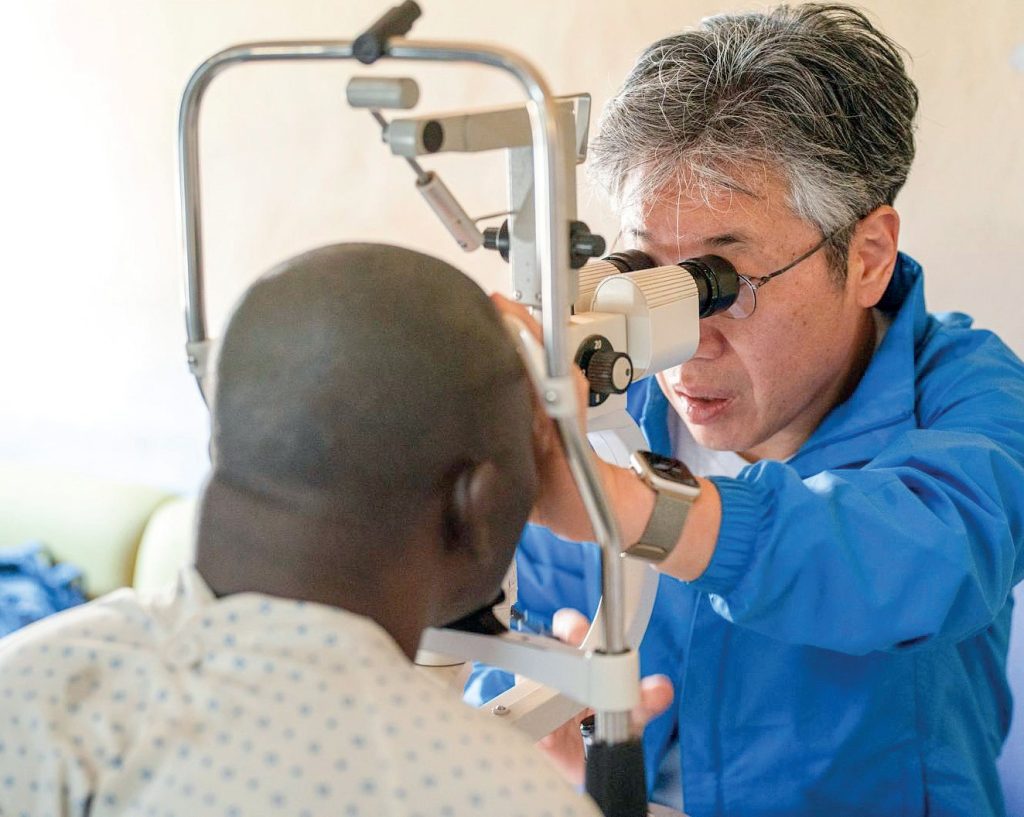
“I can see properly now,” Gelevazio says with a smile. “I hope to restart my life.”
His experience mirrors the joy of 101 cataract patients operated on during the camp.
The exercise was conceived to avert avoidable blindness and clear a piling backlog of eye surgeries.
Cataract, a cloudy area in the natural lens of the eye that blocks light, makes one’s vision blurry.
It left Esther Katupa, a 41-year-old woman from Traditional Authority Kaomba in Kasungu, blind for over a year.
Last year, Kasungu District Hospital referred her KCH from Kasungu District Hospital as the loss of sight disrupted her independence and livelihood.
Among others, Katupa stopped selling secondhand clothes to support herself and her three children.
This left her dependent on her siblings for basic support.
“I couldn’t work anymore. Blindness reduced me to a beggar,” she says. “Even caring for my children became a nightmare.”
After undergoing the surgery in Lilongwe, Katupa said she was literally “looking forward to make up for the lost time.”
“I am looking for capital to start a new business,” she said.
For people like her and Gelevazio, the benefits of the eye surgery go beyond the operating theatre.
“To us, restored sight means a return to work, farming, caring for our families and participating fully in community life,” Katupa says.
Vision Care, a Korea-based eye-care initiative, targeted conducting about 100 patients in four days.
However, they performed 81 surgeries in the first three days and another 20 on the final day.
Ministry of Health Principal Secretary Beston Chisamile says such partnerships can help bridge the gap for specialised care as the country’s health system grapples with a shortage of eye surgeons.
“That they have done 101 within days shows a big impact considering that KCH’s Ophthalmology Department handles about 1000 eye surgeries annually,” Chisamile said.
He urged other partners to support similar initiatives in other parts of the country to reduce pressure on public hospitals.
“Sight restoration has important economic benefits. After this important surgery, people can return to their communities, resume work, support their families and participate in income generating activities,” he said.
KCH deputy director general Dr Caroline Mwalwanda said the camp brought together specialists to treat cataract patients from Lilongwe and surrounding districts.
KCH, which serves about nine districts in the Central Region, has only three ophthalmologists–specialist eye doctors.
“Bringing patients from all districts is helpful because all the specialists are at one place,” she said.
KCH is using the initiative backed by visiting medical teams, to train Malawian doctors to conduct similar camps beyond the capital city.
“Malawi has trained doctors capable of providing the services, but the limited number of ophthalmologists remains a challenge,” Mwalwanda says.
The latest camp cost approximately K120 million in terms of medical supplies and other expenses, according to Vision Care eye camp team leader Dr Jae Yun Kim.
The visiting medical team funded their own airfare, accommodation and personal expenses.
The Korean charity chose KCH because it has the necessary ophthalmology infrastructure.
The team aims to establish a long-term partnership with the Ministry of Health to provide medical training, capacity building and sustainable eye-care services.
Rotary Club of Lilongwe president Mgawa Mkandawire said the group supported the fourth Vision Care Eye Camp in line with its focus on disease prevention and treatment.
“Restoring people’s sight allows them to become economically active again, creating benefits that extend to families and communities,” he said.
Mkandawire said the latest camp was the fourth Vision Care eye camp conducted in Malawi, with the Rotary Club of Lilongwe also involved in a previous camp.
For Gelevazio, Katupa and 99 others, however, the most immediate measure of the camp’s success is what they can now see or do with restored sight.
“The future looks bright as I can now work to uplift myself, my family and my community. If each of us helps his community, we can develop our country,” says Gelevazio.
Vision Care seeks to avert blindness and strengthen local teams’ capacity by training healthcare workers.